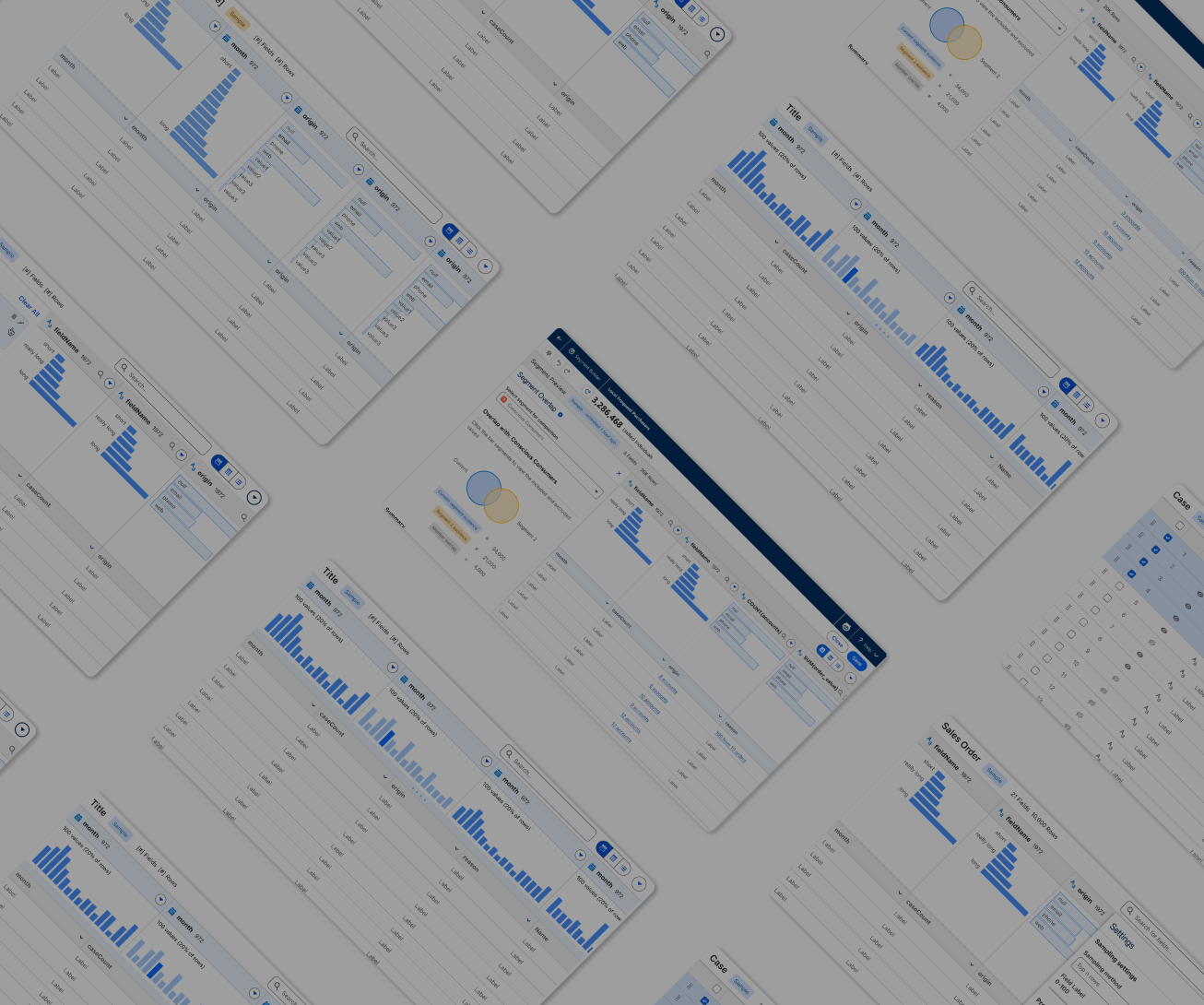
Background and Problem statement
As Data Cloud matured as a platform, we recognized that a lack of native, integrated data exploration and analysis tools was preventing users from gaining essential insights into data quality, structure, and potential actions. This absence left our customers uncertain about data pipeline steps, complicating anomaly detection, trend identification, and the determination of necessary data transformations. Without intuitive data visualization, users expresseed reduced decision-making confidence, fewer optimization opportunities, and a weakened design phase feedback loop.
Objectives
Core Goal: To enhance data understanding and quality within Data Cloud through an intuitive and extensible visual profiling framework called Data Lens.
Intuitive Visual Data Profiling: Introduce a unified visual interface for easy data assessment within Data Cloud.
Interactive Data Exploration: Empower users to dynamically explore data with features like filtering, search, sorting, and brushing, enhanced by natural language guidance from Data Cloud Agents.
Informed Decision Making: Guide users toward optimal data pipeline steps using both visual profiling and AI-powered insights.
Improved Data Quality: Ensure reliable data for downstream processes through user-friendly visual profiling tools.
Customizable Profiling: Allow users to adjust sample sizes and tailor profiling based on specific requirements.
Extensible and Reusable Framework (Data Lens): Develop a flexible framework with reusable components that can be integrated across Data Cloud applications to provide a consistent and efficient user experience while supporting future enhancements like advanced analyzers and domain-specific insights.
Design principles
Composability: allow Data Lens to be tailored to each unique use case or context. Feature teams can enable or disable most componentry in order to optimize Data Lens for their users’ needs.
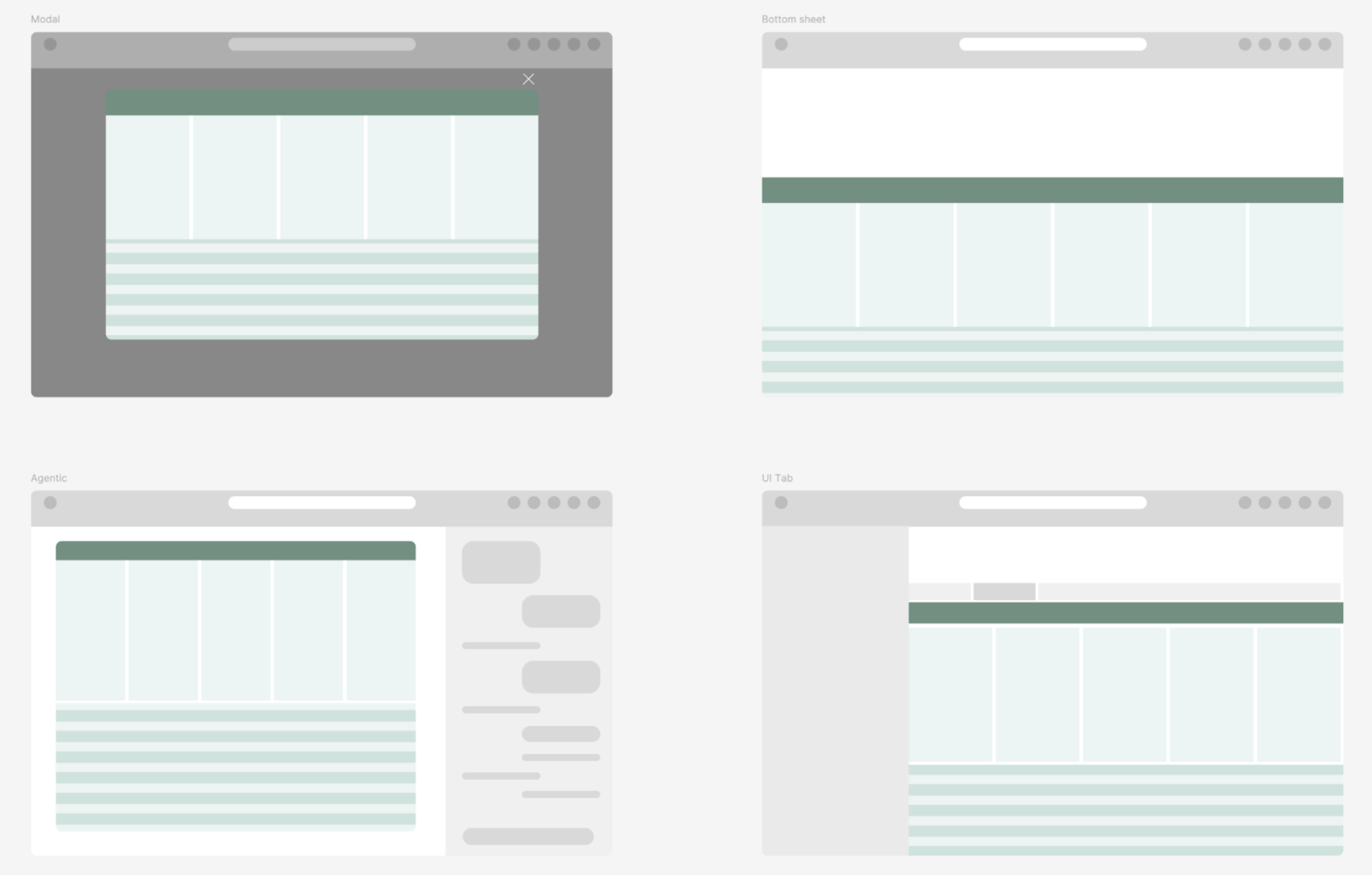
Adaptability: Data Lens can be invoked or situated within a wide range of UI contexts: modal, embedded, and generative
Responsiveness: Data Lens will be performant, intuitively reactive to user interactions, and will scale seamlessly in any form factor
Accessibility: Data Lens will be 100% WCAG compliant
My role
Lead the E2E product design of a new, composable, cross platform data profiling module, internally known as “Data Lens.”
Ensure a high bar for release quality and WCAG compliance.
Communicate design progress and readiness to stakeholders and product leadership.
Recognizing the crucial need for intuitive data exploration tools and as a design leader for the Data Lens project, I proactively assumed a leadership role. I immersed myself in theproject, accelerating my understanding by studying existing data profiling tools. By the second week, I had developed an explainer video, showcasing an early concept prototype, to effectively communicate our design vision, core functionalities, and the strategic business value of Data Lens to product leadership, ensuring alignment and momentum from the onset.
Discovery
Initial discovery for Data Lens involved a provisional survey of competing data profiling products, to understand different product features, profiling strategies, and the level of integration with other data management capabilities, such as data transformation and cleaning. By examining how these products addressed similar challenges, I gathered key insights to inform the development of Data Lens, ensuring it would meet user needs and stand out in the market.
I worked closely with an Engineering Architect to understand and map how data would enter Data Lens, the statefulness of that data under various conditions, and the effect of transformational actions vs. read-only scenarios.
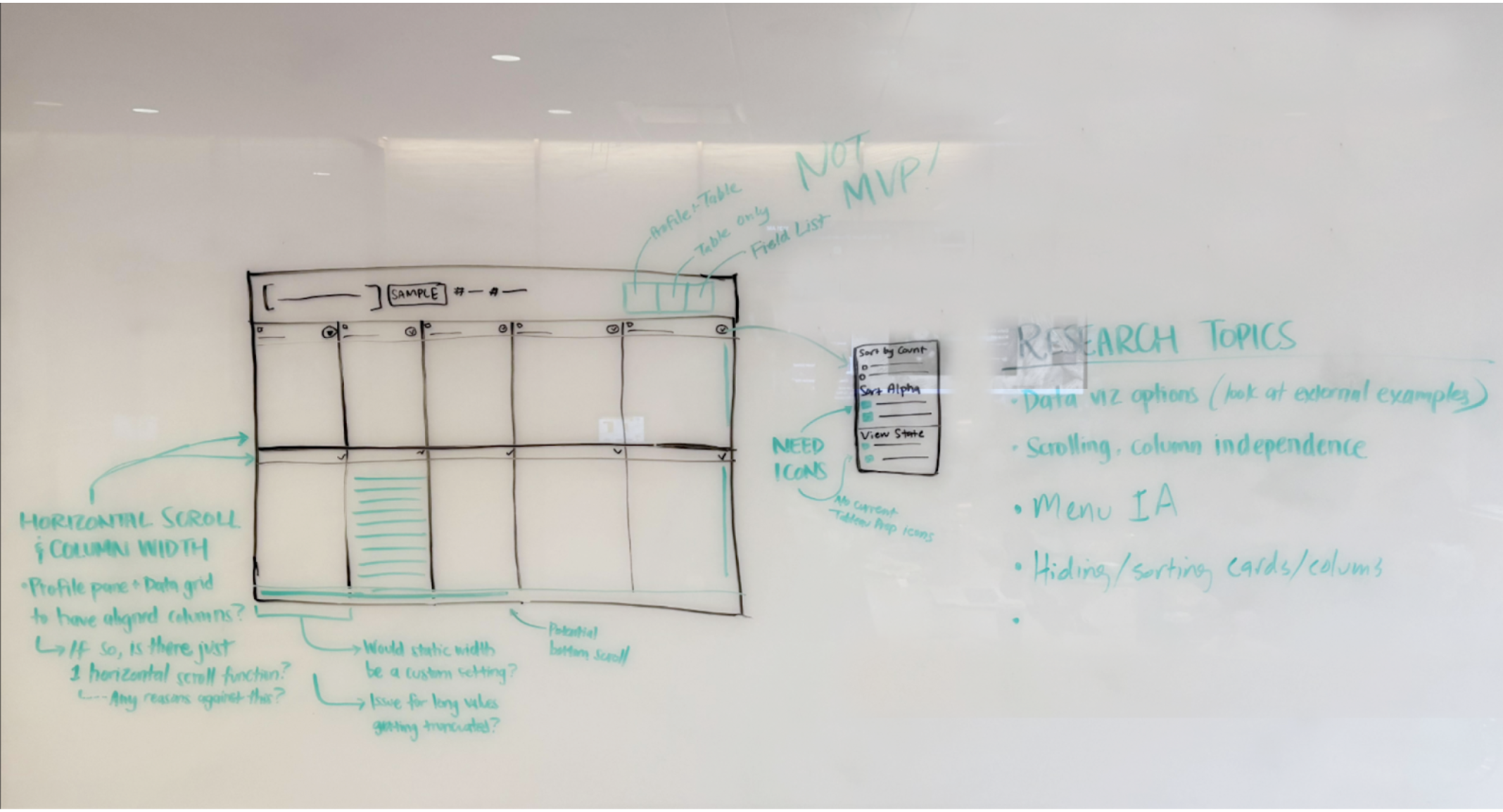
I then conducted low-fidelity explorations to drive team discussions and gather initial feedback, with a focus on refining the information architecture. The primary aim duringthis phase was to ensure a solid foundation for organizing and presenting data within Data Lens.
One critical area of exploration was around understanding how Data Lens might be situated among various UI contexts (e.g., as a modal vs. an embedded element):
Accessibility
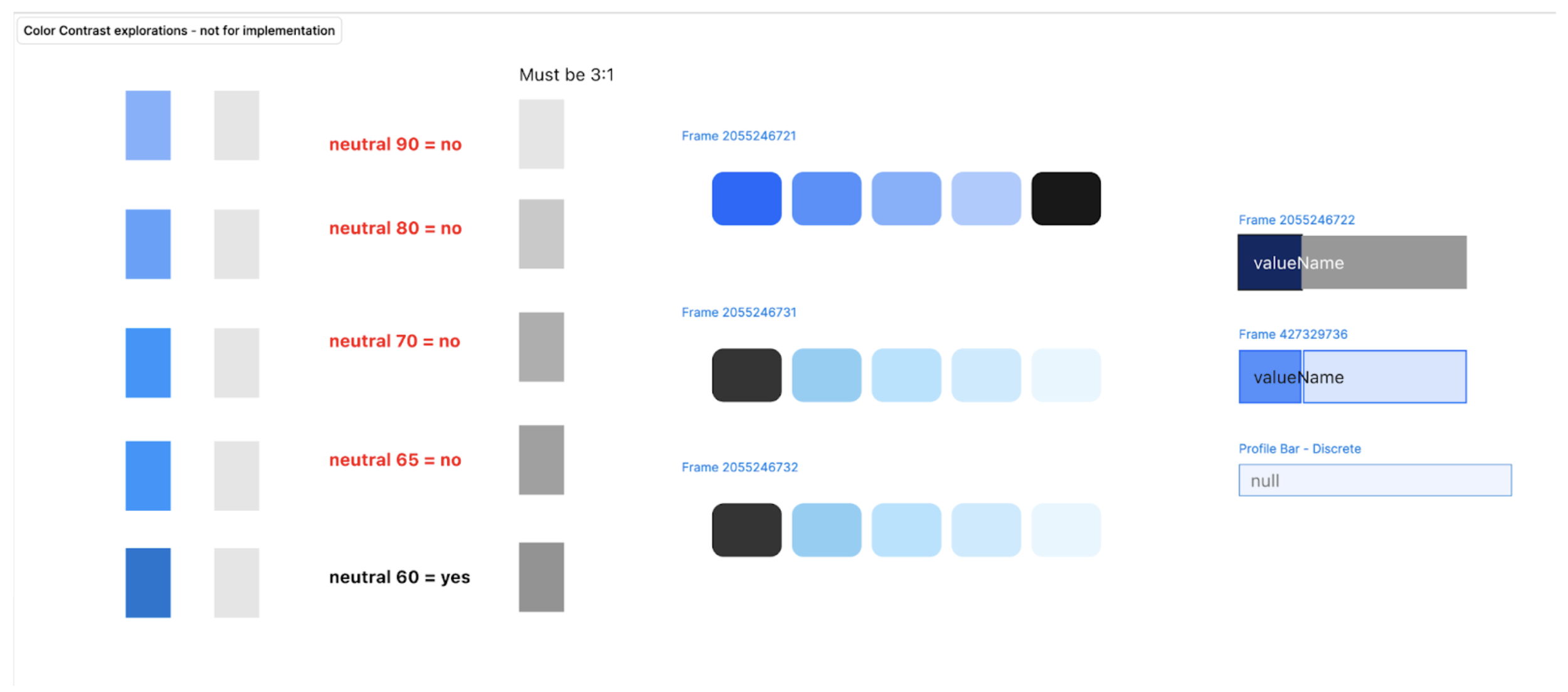
On of the major challenges in this project was ensuring that we met rigorous standards for accessibility. One of the most pointed challenges lay in providing multiple layers of visual information simultaneously, particularly during the ‘brushing’ interactionI. I collaborated closely with a Senior Accessibility Engineer to ensure adherence to Web Content Accessibility Guidelines (WCAG) 2.1 Level AA standards. Specifically, the design aimed to meet requirements such as 1.4.3 Contrast (Minimum) for text and images of text and 1.4.11 Non-text Contrast for user interface components and graphical objects. Overall, our goals was to ensure full compliance with WCAG standards for contrast, text legibility, interactive elements, and overall user interface design upon release of the feature.
Iteration
Gathering extensive feedback was paramount in refining the Data Lens design. After initial explorations, I presented concepts to diverse stakeholders including designers, product managers, researchers, and leadership. This iterative feedback loop helped identify potential issues and opportunities, significantly shaping the evolving design. The insights gained from these reviews were then incorporated into the formal design specification.
I developed a comprehensive specification for Data Lens. This document captured all components of the module, outlining their various states and behaviors with detailed guidance for implementation. It went beyond simple visuals, including thorough interaction specifications, accessibility considerations, and technical feasibility requirements.
This comprehensive approach ensured that engineering teams had a clear and actionable roadmap, minimizing ambiguity and streamlining the development process.
Communication
There were many aspects of this project that demonstrated mys approach to communication, developed over 10 years of design experience and over 20 has an organizational leader. My communication style is centered around transparency and consistency to ensure project success and stakeholder alignment. I prioritized regular updates through scheduled check-ins, leveraging the DACI (Driver, Approver, Contributor, Informed) model to clarify roles and responsibilities within collaborations. Consistently keeping stakeholders informed of progress, challenges, and decisions is a core tenet of my design philosophy.
One example of the way I communicate is the"pro tip" videos I created for our engineering teams as we moved into the implementation phase of Data Lens. These short, informational videos focused on engineering-oriented features within Figma, a contribution that significantly accelerated our development team's pace and fostered clarity around when designs were build-ready . This proactive approach enabled the team to adopt a more iterative workflow, facilitating seamless feedback exchange between design documentation and live code deployments.
I also initiated a weekly ‘Design Update’ to make sure the team had continual visibility into my work and an entry point to new designs that needed to be reviewed:
Outcomes
Delivered a comprehensive design specification covering responsive and accessible design, various states, error handling, and feature-specific guidance.
Built early and sustained buy-in by producing a compelling executive explainer video, DACI-aligned updates, and lightweight "pro tip" Figma videos—acceleratingengineering handoff and improving build quality and clarity.
Reusable platform-level Design System contribution
Established strong working relationships across all feature teams, fostering robust collaboration with cross-functional partners and fellow designers.
Ensured full WCAG 2.1 AA compliance through deep collaboration with accessibility engineering, rectifying inherited color contrast issues and introducing compliant visualizations, focus states, and keyboard navigation.
Positioned Data Lens for agentic AI integrations, bridging traditional data profiling with next-gen AI-enhanced workflows.
Initial feedback from customers has been positive